1. Introduction: The Ivory Tower Myth
The popular image of Yale is a collection of silent, Gothic spires—a static “ivory tower” where the world’s elite ponder the abstract while buffered from the noise of the city. But the institutional reality is far more dynamic, occasionally scrappy, and defined by a deep, often friction-filled interconnection with its surroundings. From an 18th-century “Battle of the Books” involving armed conflict to modern-day social experiments conducted in neighborhood storefronts, Yale’s history is less about aristocratic isolation and more about a community that is messy, resilient, and inextricably tied to its home. Beneath the prestigious veneer lies a story of radical randomness and a long-standing “venture capital” approach to community stewardship.
2. Truth #1: The Move to New Haven Was Actually an Armed Conflict
Yale’s status as a New Haven icon was not a foregone conclusion; it was the result of a 1716 bidding war that nearly sparked a civil war. The school didn’t even start in Saybrook. Its first rector, Abraham Pierson, taught students from his home in Killingworth (now Clinton) because his congregation refused to release him from his preaching contract. The college only settled in Saybrook after Pierson’s death in 1707.
By 1716, when the trustees voted to move to New Haven—deemed a “very Convenient place”—the residents of Saybrook were not about to let the college’s library leave without a fight. When the county sheriff attempted to transport the collection, Saybrook locals orchestrated a campaign of literal sabotage. They broke the transport carts, turned the oxen loose, and destroyed bridges along the route. While roughly 1,000 books eventually reached New Haven, 260 volumes were lost or destroyed in the melee. This “Battle of the Books” established the university’s early grit and its defining, if initially forced, relationship with the city.
The event is still immortalized with characteristic wit in the songs of the Yale Glee Club:
“Newton’s Principia (all about gravity) / Proved he was right, in the head made a cavity. / Tomes on theology, Hebrew philology, / Flew with reflections on one’s genealogy. / Chaucer and Spenser dealt many a blow. / Never did library circulate so! / Almost a fourth of volumes was taken, / But Milton was saved and they brought home / the Bacon.”
3. Truth #2: Solving the Childcare Crisis Through Architecture
Critics often dismiss Ivy League research as high-altitude theorizing, but at the School of Architecture, the work is decidedly down-to-earth. The Jim Vlock Building Project is a primary example of Yale “scrapping” with real-world problems. For decades, graduate students have designed and built housing to address New Haven’s local needs, operating not from a remote office, but from the Urban Design Workshop’s storefront space on Chapel Street—a physical, non-ivory-tower presence in the heart of the community.
In 2024, the project tackled the “crisis in care”—the systemic failure where childcare costs remain astronomical while educator salaries stay prohibitively low. In partnership with the Friends Center for Children, Yale completed a project to provide rent-free housing for early childhood educators. This shift from theoretical learning to symbiotic stewardship uses architecture as a tangible tool for social justice, proving that the university’s most impactful work often happens on a residential street corner.
4. Truth #3: The Power of Randomness: The Residential College “Microcosm”
The 14 residential colleges are the “heart of the Yale experience,” but their power lies in a deliberate lack of choice. Unlike many elite institutions where students self-segregate by major or social background, Yale students are randomly assigned to their colleges. This “randomness” is the secret sauce of Yale’s culture, forcing a diverse cross-section of the world into a shared “home base” equipped with its own libraries, gyms, and traditions.
From the high-energy “First-Year Olympics” on Old Campus to the intellectual intimacy of “College Teas”—where students might host a head of state or a pop culture icon—the system allows for the cohesiveness of a small school within a global research giant. This internal microcosm of the university is now being mirrored in how Yale engages with the city: treating the “micro-neighborhoods” of New Haven not as distant entities, but as essential partners in a shared ecosystem.
5. Truth #4: A Multi-Million Dollar Bet on “Local Genius”
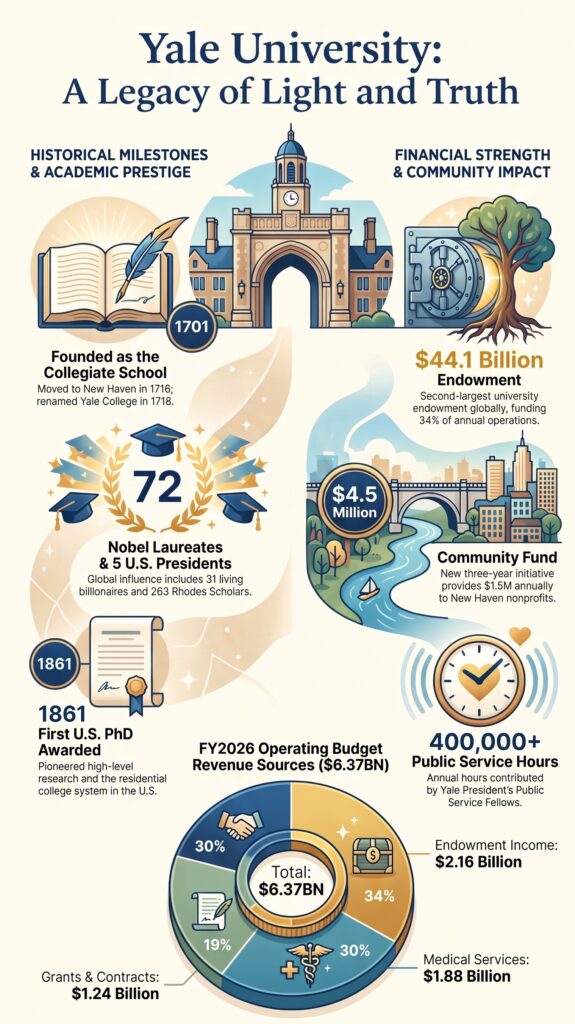
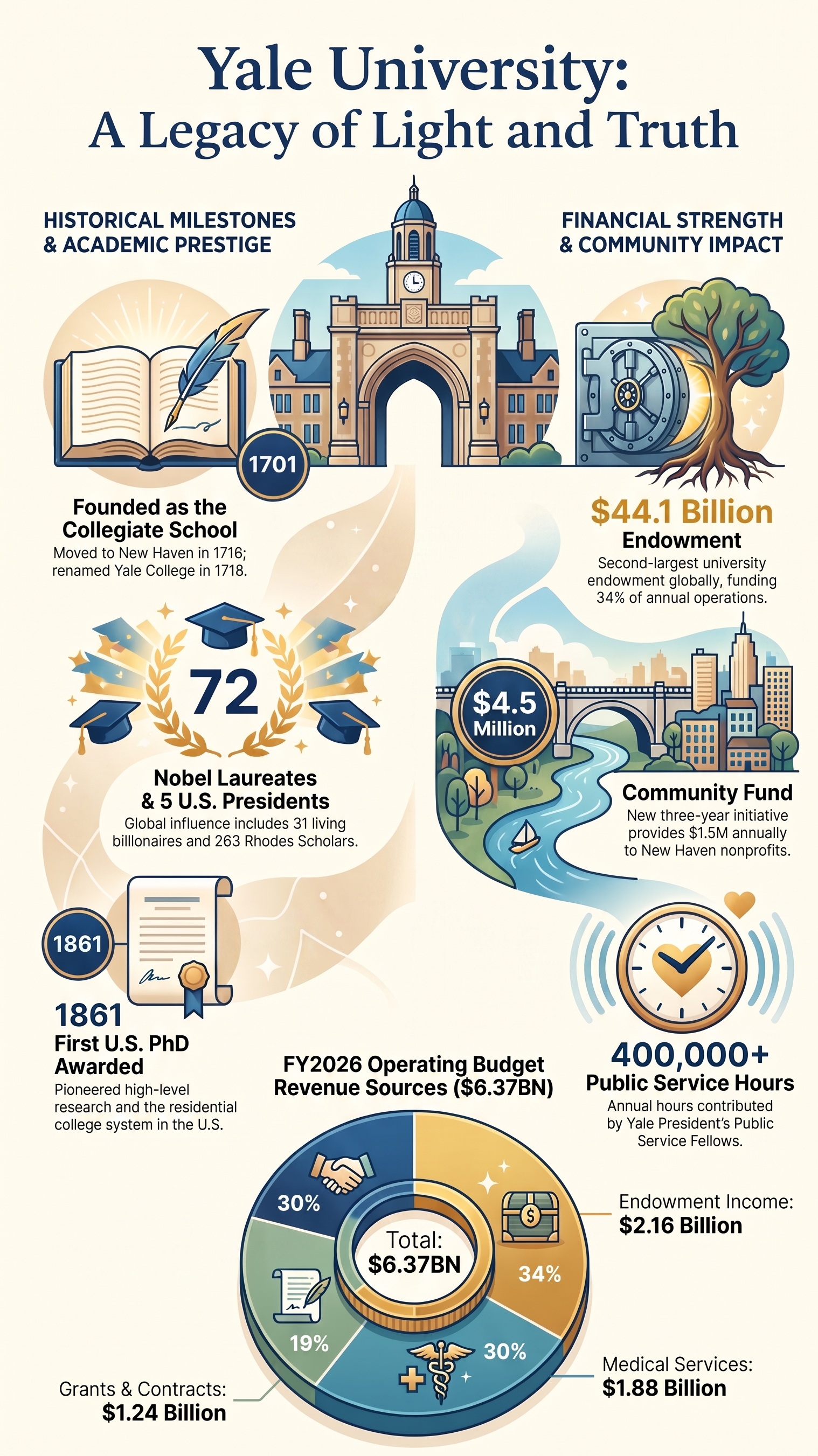
Yale’s financial relationship with New Haven is evolving from that of a landlord or service provider into a venture capitalist for community solutions. While the university contributes roughly $125 million in direct revenue to the city and $28 million in “in-kind” services annually (including medical services and police staffing), the newly launched $4.5 million Yale and New Haven Community Fund represents a shift in philosophy.
Instead of institutional top-down management, this fund bets on “local genius,” awarding project-specific grants of up to $500,000 to nonprofits that already have the solutions to neighborhood challenges. It is a financial recognition that those living in New Haven’s micro-neighborhoods are the true experts on housing stability and economic opportunity.
“The fundamental belief behind this fund is that many of the solutions to many of our challenges are already right here in New Haven,” noted President Maurie McInnis. “The hope is that supporting the people working on those solutions will enable them to reach the full horizon of their visions.”
6. Truth #5: From Pie Plates to Nobel Prizes: A Culture of Discovery
Yale’s culture of innovation thrives on a range that spans the delightfully low-brow to the world-changing. In 1920, the “scrappy” student spirit gave birth to the Frisbee, when students discovered that empty pie plates from the local Frisbie Pie Company were aerodynamically superior. Passersby would hear the warning shout of “Frisbie!” as the tin discs whizzed across the green.
That same spirit of “infectious amazement” continues to dominate the global stage. In 2025 alone, the university celebrated a triple-crown of discovery: Professor Emeritus Michel Devoret won the Nobel Prize in Physics for foundational work in quantum computing; economist Joel Mokyr (Ph.D. ’74) received the Nobel in Economics for identifying the prerequisites for technological progress; and former World Fellow María Corina Machado was awarded the Nobel Peace Prize for her democratic struggle in Venezuela. This range—from the “ferocious” mascot Handsome Dan to the subatomic breakthroughs of a “world-class” science program—defines the unique Yale ecosystem.
7. Conclusion: The Symbiotic City
The historical arc and current initiatives at Yale make one thing clear: the university is not just in New Haven; it is of New Haven. Its future is inextricably tied to the social justice, economic opportunity, and local genius of the city it calls home. As Yale expands its global reach, its most profound responsibility remains grounded in the blocks surrounding its gates.
How should the world’s most elite institutions balance their global ambitions with their responsibilities to the neighborhoods they call home?